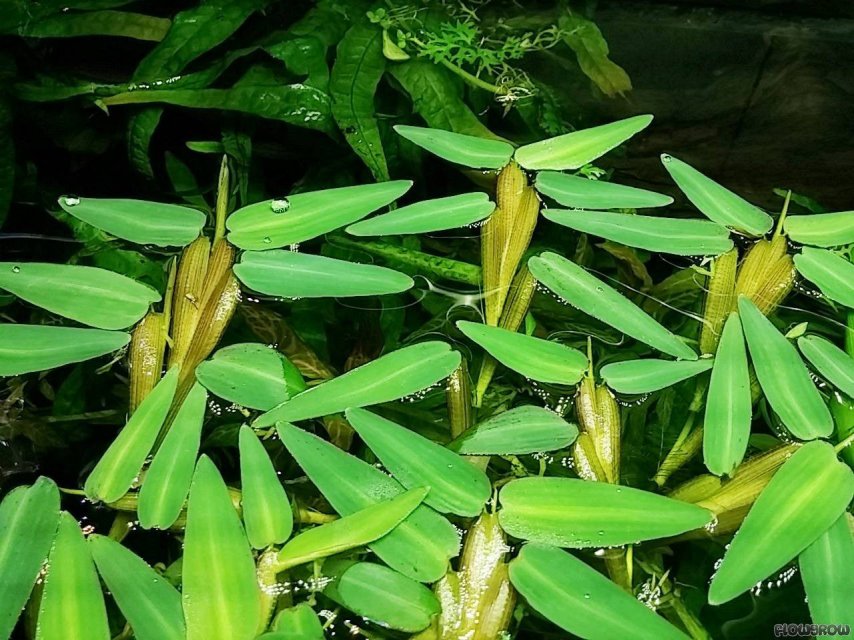
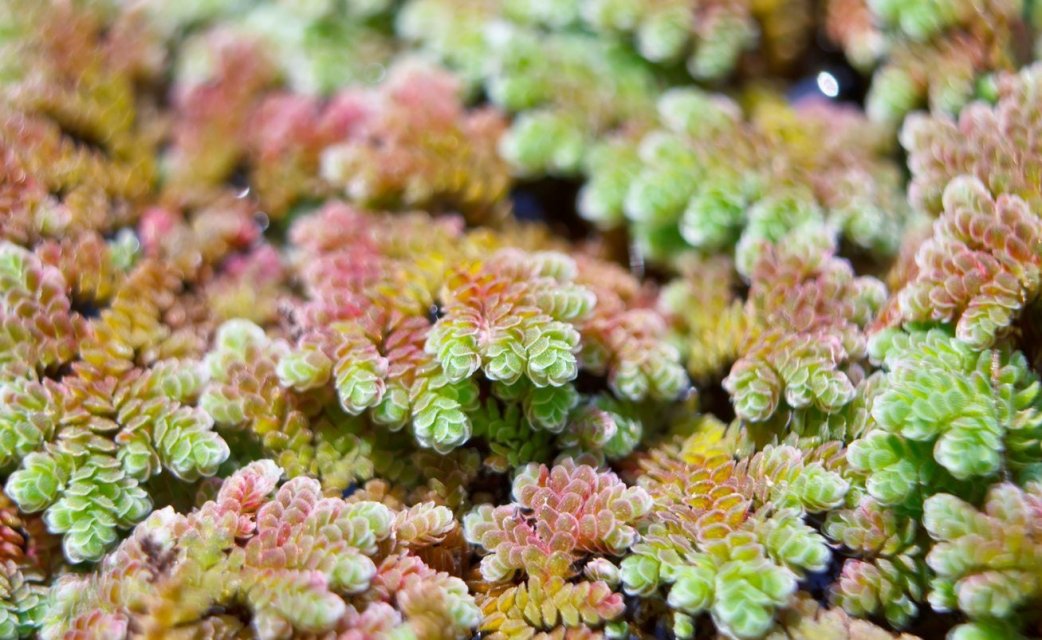
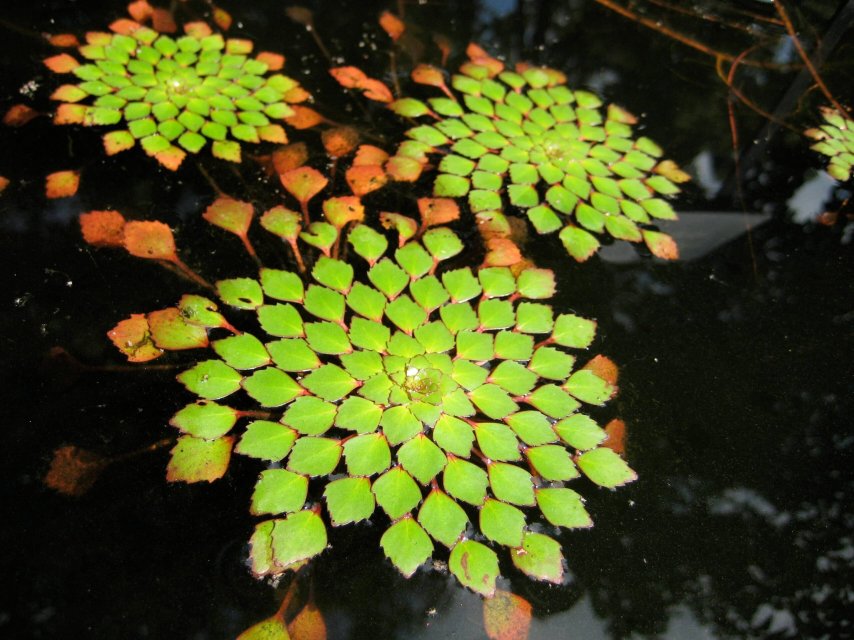
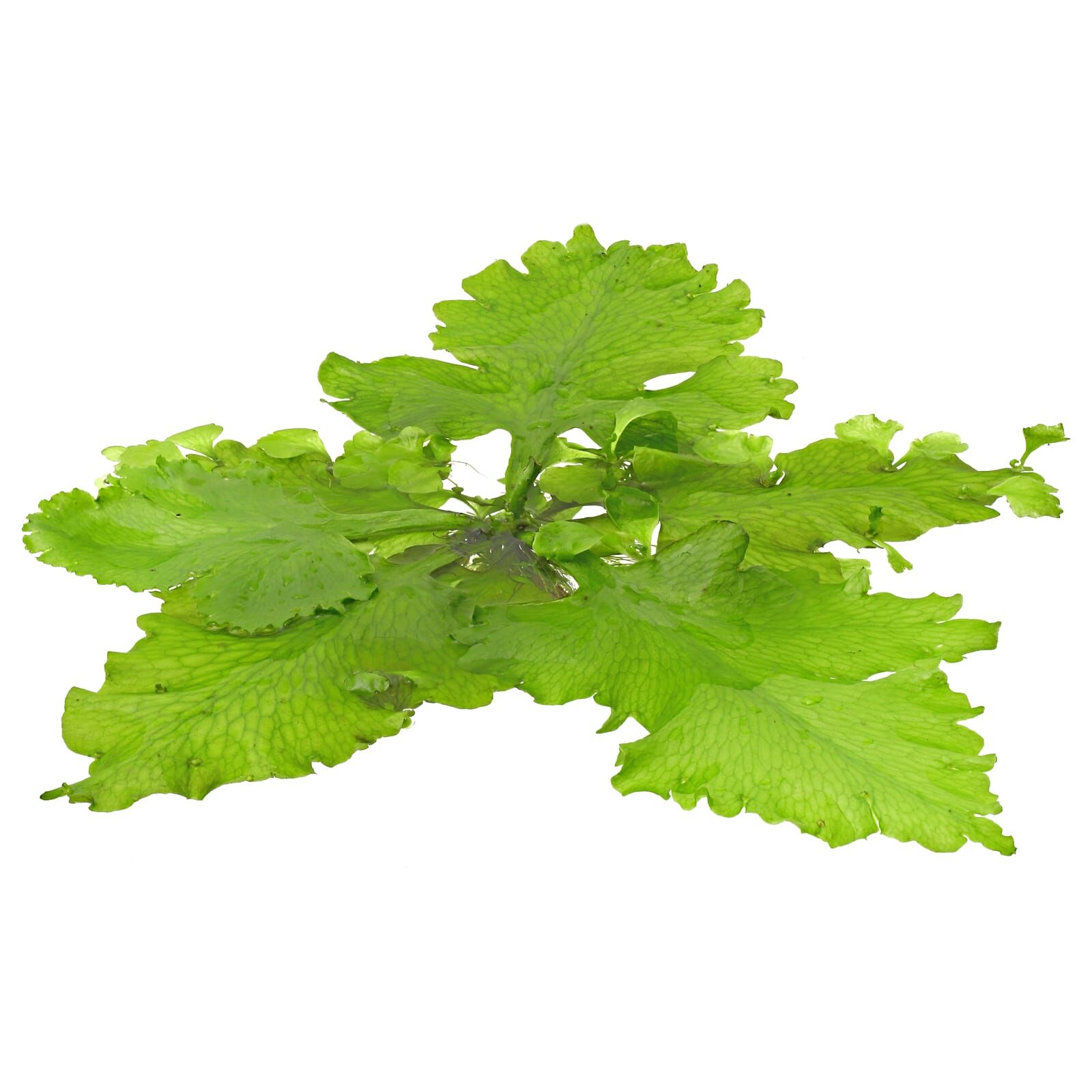
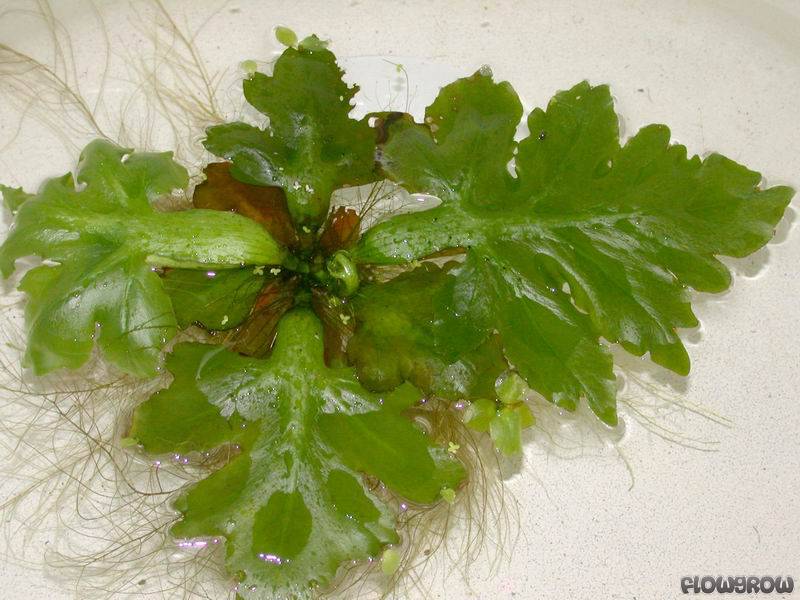
Have you seen ceratopteris pteridoides before?
*Big long sigh*
So, the geuns Ceratopteris is probably monotypic. There's nominally nine species in it, Ceratopteris baguangensis, C. chingii, C. chunii, C. cornuta, C. oblongiloba, C. pteridoides, C. richardii, C. shingii (not the same as chingii) and C. thalictroides. C. richardsii was developed and patented, and the scientific name is important for maintaining the patent; you've probably never seen it, unless you played with it in the 5th grade to demonstrate tissue culture methods. It's the "Sea Monkey" of water sprite, where a company is insisting that it is a valid species.
There's a good argument that a couple of the other ones are valid species, but it's hard to support. Both in the wild and in cultivation, all of the species show a high degree of polymorphism. The issue is that a bunch of plants growing at site A and a bunch of plants growing at site B may appear different from each other, yet the same, because the ones at site A are all clones and the ones at site B are all clones, but they're not genetically distinct enough to be different species. Kind of like how Brasica oleracae are all the same species, regardless of whether it is broccoli or brussel sprouts. (The same works for Crypt wendtii brown/red/green/whatever, or any number of Amazon sword cultivars, or squash). The issue is that some of these polymorphisms have gotten described as valid species... yet, they can shift under long term cultivation in "wrong" conditions, or otherwise revert.
In the aquarium trade, this gets worse. “Water sprite” is applied inconsistently to both finely dissected (“feathery”) and broader-leaved forms, with different growers historically assigning different names over time. As the number of large-scale growers has consolidated, those labels have partially stabilized, but they still do not map cleanly onto robust species boundaries in the material being sold.
It is possible that there are multiple species of Ceratopteris. I disagree, and the scientific consensus is that this a messy genus of plants in a poorly resolved lineage, demonstrating plastic morphology. However, I can see why some authorities support multiple species when these hobby-obscure species are involved. Yet, all of the plants in the trade are unquestionably the same species.
So, to answer your question as to whether I've seen C. pteridoides: what are you calling C. pteridoides?